How to Advertise on Xiaohongshu for Foreign Brands 2026
How to advertise on Xiaohongshu is usually not the first question foreign brands should ask. The better question is whether your account, offer, content, and conversion path are ready for paid traffic.
Xiaohongshu, also known as RedNote or Little Red Book, is not a normal social ad channel. Users search, compare, save posts, read comments, and look for proof before they contact a brand. That makes Xiaohongshu advertising useful for foreign brands in beauty, lifestyle, home, travel, education, wellness, premium consumer goods, and some service categories. But ads will not fix weak localization or an empty account.


This guide explains when to advertise, what to prepare, which ad routes matter, and how to avoid paying for visibility that never becomes a qualified conversation.
Quick answer: can foreign brands advertise on Xiaohongshu?
Yes, foreign brands can advertise on Xiaohongshu, but the route depends on entity eligibility, category rules, account status, content readiness, and campaign objective.
Before launching, check four layers:
| Layer | What to check | Why it matters |
|---|---|---|
| Account | Can you verify or operate the right business account? | Ads and trust depend on account legitimacy. |
| Category | Is your product or service allowed and low-risk? | Regulated sectors may need extra proof or may not fit. |
| Content | Do you have native notes that match search intent? | Ads work best when they amplify content users already believe. |
| Conversion | Where does the user go after clicking or messaging? | Traffic without follow-up becomes wasted spend. |
If your account setup is still unclear, start with Xiaohongshu business account setup for foreign brands.
Should you advertise on Xiaohongshu now?
Use this before briefing an agency or media buyer:
| Situation | Recommended next step |
|---|---|
| You have a workable account, localized positioning, and 6-10 strong notes | Start a small ad test. |
| You have search demand but no native content | Build content and KOC proof before scaling ads. |
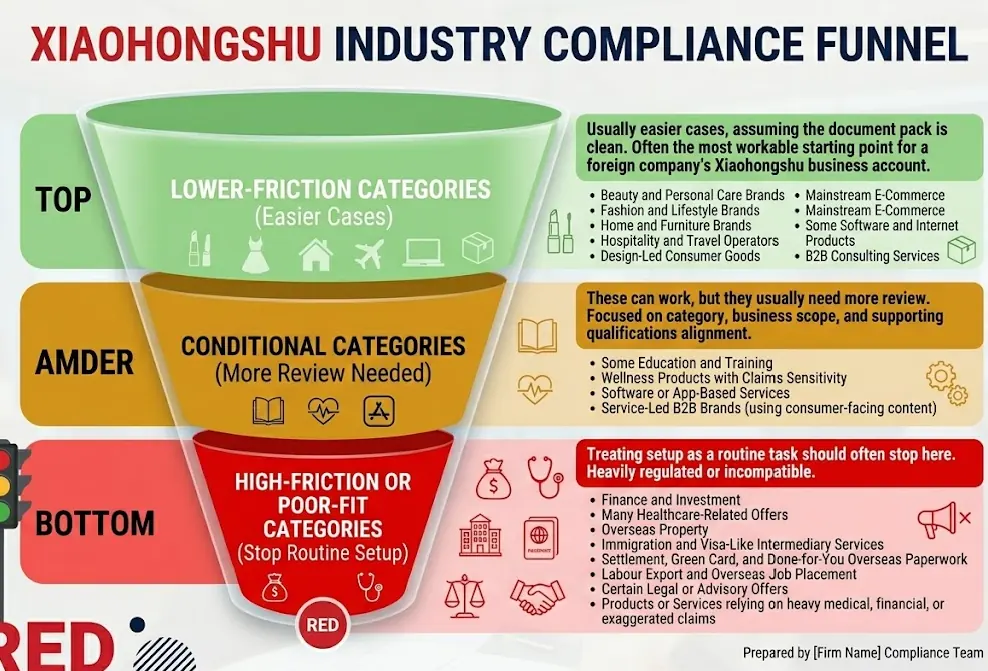
| You sell in finance, medical, immigration, investment, or other sensitive areas | Review eligibility and claims risk first. |
| You are a premium visual brand with proof outside China | Use Xiaohongshu for discovery, then test paid amplification. |
| You depend on distributors, stores, or offline sales | Use Xiaohongshu as brand proof, but pair it with partner outreach. |
| You need immediate B2B demand capture | Consider Baidu, WeChat, PR, or events alongside Xiaohongshu. |
Twish point of view: Xiaohongshu advertising is an amplifier, not a shortcut. Advertise when paid traffic can make a working message travel further. If the message is not localized, ads only help more people ignore it.
How to advertise on Xiaohongshu: the launch sequence
Step 1: Confirm account and category eligibility
Check company documents, trademark or authorization logic, operator details, product category, and claim sensitivity. This affects account approval, ad review, naming, and whether your sales team can safely make certain claims in content or private messages.
Before launching Xiaohongshu ads, use the → Twish Xiaohongshu Ads Calculator to estimate projected outcomes and the minimum required budget for an initial projection.
Step 2: Localize the offer before the ad
Do not translate an English campaign and call it localization. Chinese users ask whether your offer fits their city, budget, lifestyle, process, and trust expectations. A furniture brand may need to shift from “European craftsmanship” to small-apartment storage, material safety, delivery timing, and real home scenes. An education brand may need to shift from “global ranking” to admissions anxiety, parent decision-making, and timeline clarity.
For broader platform context, read Xiaohongshu marketing for foreign brands.
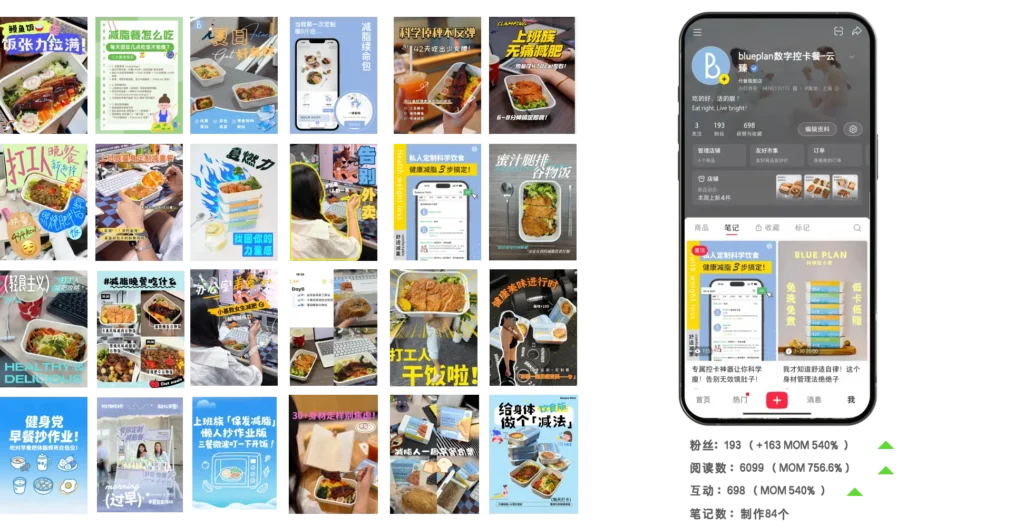
Step 3: Build 6-10 native notes first
Your account should not look empty when paid traffic arrives. Build notes around real user intent:
- problem-led searches
- comparison posts
- process explainers
- customer scenarios
- founder or expert opinions
- FAQ-style objection handling
You do not need dozens of posts before testing. You do need enough content for a visitor to think, “This brand understands my situation.”
Step 4: Choose the right ad route
| Ad route | Best use | Watch-out |
|---|---|---|
| Search ads | Capture users already searching for a solution | Needs keyword planning and relevant notes. |
| Feed ads | Reach a defined audience with native creative | Wastes budget if the hook feels too promotional. |
| Note boosting | Give proven notes a second wave of reach | Do not boost weak notes just because they are new. |
| Creator collaboration | Build trust through KOLs or KOCs | Creator fit matters more than follower count. |
| Brand Zone or larger placements | Support brand searches or larger launches | Usually better for brands with stronger awareness and budget. |
For many foreign brands, the cleanest first test is search intent plus boosted proven notes. This keeps spend close to real user demand.
Step 5: Set the conversion path before launch
Decide where the user goes next: Xiaohongshu DM, consultation component, store, WeChat, WeCom, mini-program, China-friendly landing page, or offline appointment.
For lead generation, the handoff matters as much as the ad. Decide who responds, what questions they ask, how leads are tagged, and when serious enquiries move to sales. For platform lead tools, see Xiaohongshu lead generation tools.
Step 6: Measure lead quality, not only impressions
Track search impressions, click-through rate, saves, comments, profile visits, DMs, WeChat or WeCom adds, qualified leads, and cost per qualified enquiry.
The first campaign should usually prove learning quality: which angle creates serious questions, which Chinese wording builds trust, which audience wastes budget, and which note deserves more spend.
Common mistakes that waste Xiaohongshu ad budget
The biggest mistake is running ads before the account looks credible. A user who clicks into an empty profile will not trust the brand.
The second mistake is translating global creative directly. Chinese users do not reward international tone if the content misses local decision logic.
The third mistake is choosing ad formats before choosing the journey. Search ads, feed ads, boosted notes, and creator content solve different problems.
The fourth mistake is measuring only reach. Saves, comments, DMs, and qualified enquiries usually tell a more useful story.
The fifth mistake is having no follow-up system. If no one can reply quickly in Chinese, tag enquiries, and route serious leads, paid traffic creates noise instead of growth.
❓ FAQ: Advertise on Xiaohongshu
Wrap-up
Learning how to advertise on Xiaohongshu is useful, but the real advantage comes from knowing when to advertise. For foreign brands, Xiaohongshu ads should amplify localized content, credible account proof, and a clear conversion path. If the foundation is weak, paid traffic exposes the problem. If the foundation is ready, a focused pilot can show which China-facing message deserves scale.