How Foreign Brands Use Xiaohongshu and WeChat Together for Lead Generation in China
Foreign brands use Xiaohongshu and WeChat together best when they stop treating them as two separate social media accounts. In China, discovery and conversion often happen in different places. Xiaohongshu helps users find, compare, and trust early signals. WeChat helps brands look credible, answer questions, and move leads into private follow-up.
The strongest system is not “post on both.” It is a connected funnel: Xiaohongshu creates interest, WeChat makes that interest usable, and WeCom or a simple CRM helps the team qualify and route the lead.
Quick answer: Xiaohongshu creates interest, WeChat makes it usable
Xiaohongshu is where many Chinese users search for real experiences, product comparisons, service options, school reviews, travel ideas, and lifestyle inspiration. It is strong at public trust.
WeChat is where users verify the brand, read deeper content, ask questions, join a consultation path, or connect with a person. It is strong at private trust.
For foreign brands, the real question is not whether Xiaohongshu or WeChat is better. The question is where the buyer journey breaks:
| Funnel problem | Platform role |
|---|---|
| Users do not know you | Xiaohongshu discovery and KOC-style proof |
| Users are interested but unsure | Xiaohongshu notes plus WeChat credibility content |
| Users want to ask questions | WeChat or WeCom handoff |
| Leads are messy or hard to route | WeCom tags, simple forms, or CRM |
| Sales team needs context | Lead source, need type, budget, project cycle, and fit notes |
→ For broader Xiaohongshu context, read Xiaohongshu marketing for foreign brands.
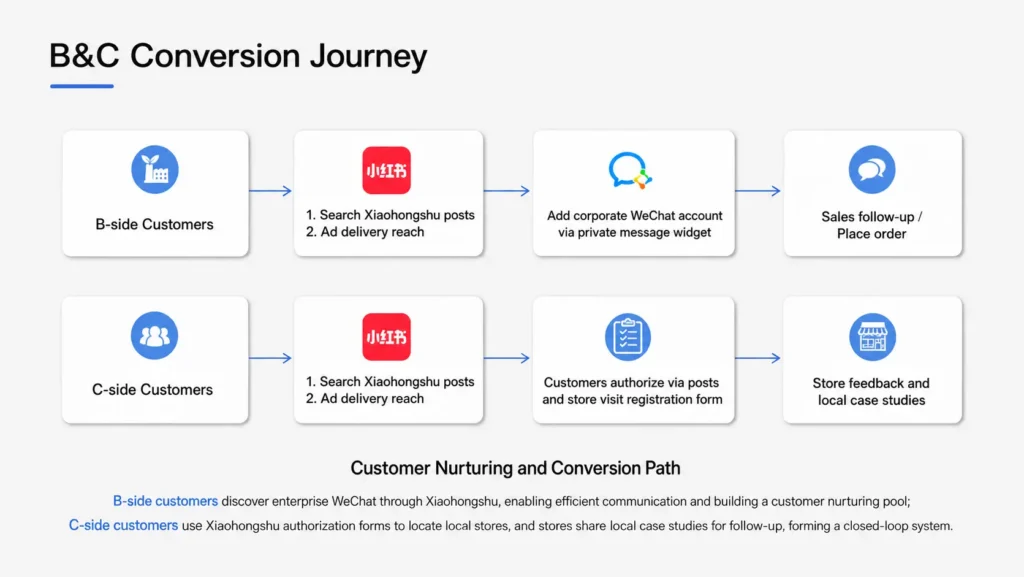
The Xiaohongshu-to-WeChat funnel for Brands
1. Discovery note
The funnel starts with a note that answers a real search or concern. Good topics are usually problem-led: “how to compare options,” “what mistakes to avoid,” “what the process looks like,” “is this worth it,” or “what does it cost.”
Build notes backward from the ideal WeChat conversation. If you want users to ask about pricing, application, product fit, or consultation, the note should naturally create that next question.
2. Comment or DM trigger
The next step should feel useful, not pushy. Instead of “contact us now,” use a reason:
- ask for a checklist
- request a quote
- get a comparison sheet
- book a consultation
- ask for a case example
- receive a product or application guide
This gives users permission to move from public discovery to private conversation.
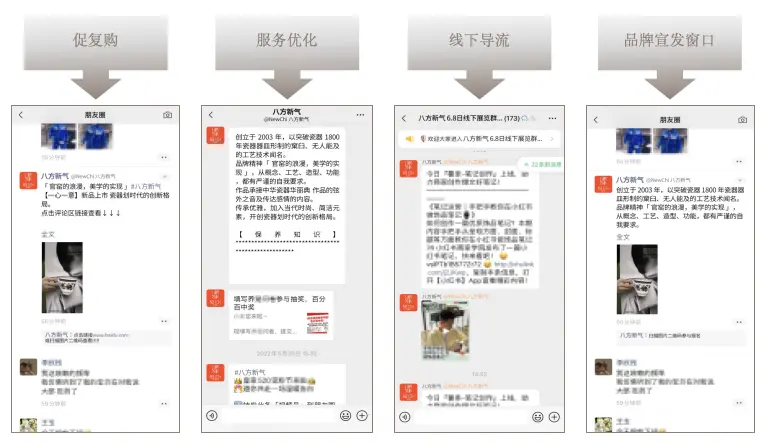
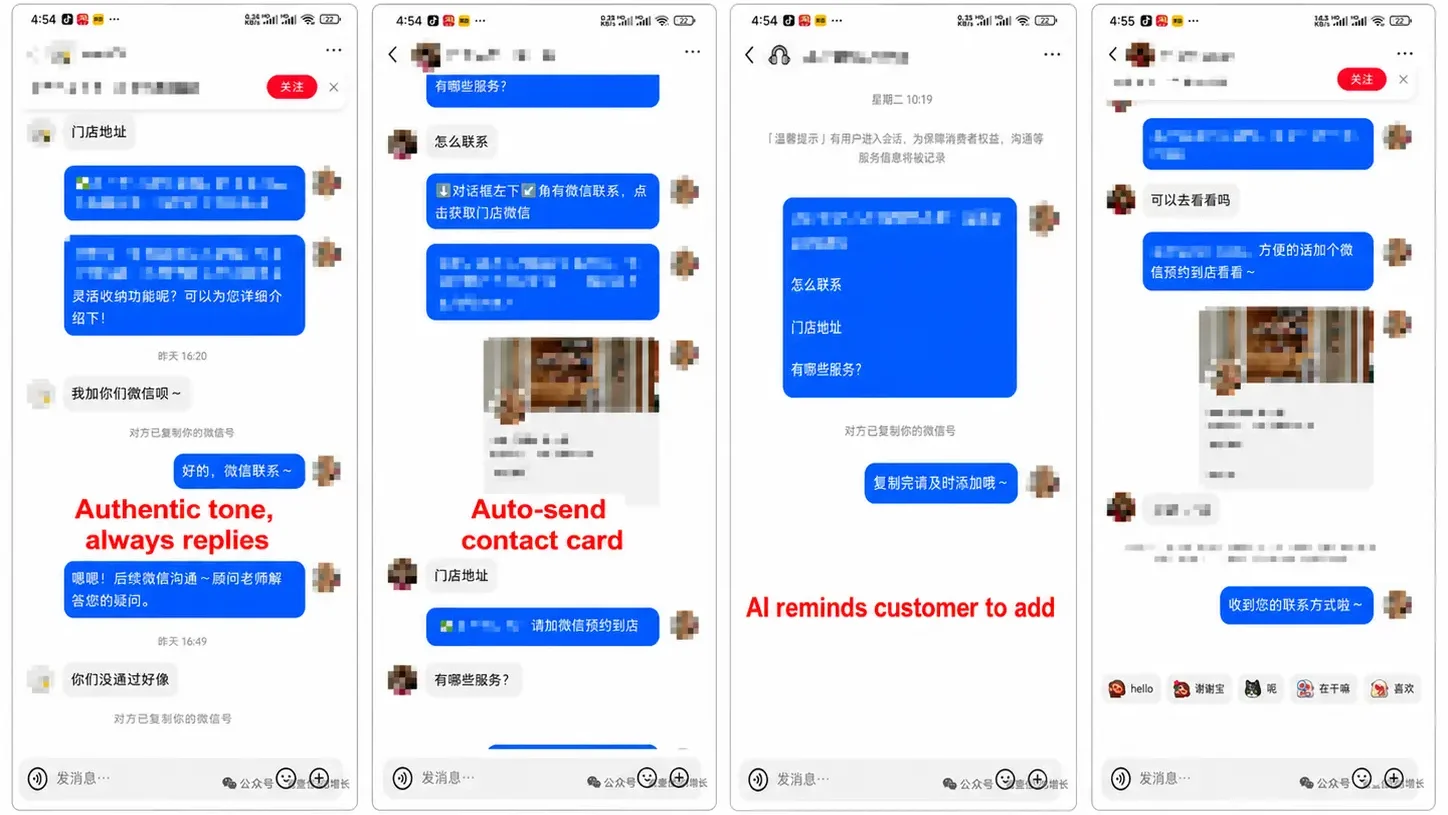
3. WeChat or WeCom handoff
For many lead-generation businesses, WeCom is better than a phone number or company email. Chinese users often want a fast, familiar contact path, not a form that opens badly in WeChat or a phone call they do not want to make.
At the early stage, the minimum viable stack is often enough:
- Xiaohongshu account
- WeChat Subscription Account
- WeCom contact path
- simple lead sheet or CRM
Mini-programs and heavier SCRM systems can come later when lead volume justifies the build.
4. Qualification and follow-up
As a marketing agency, Twish should not pretend to fully judge a client’s lead quality from outside the business. A better model is to help design the collection and routing logic. A practical process looks like this:
| Stage | What happens |
|---|---|
| Marketing lead intake | A marketing specialist collects all enquiries from Xiaohongshu and WeChat. |
| Basic qualification | The lead is tagged by budget, project cycle, company, role, need type, and target-customer fit. |
| Client-defined grading | The client defines what A, B, and C leads mean for its own sales system. |
| Sales routing | Qualified marketing leads are assigned to the right salesperson. |
| Return pool | If sales rejects the lead, it returns to a shared pool for later nurture or review. |
What each platform should do for Brands
Xiaohongshu: search, proof, scenarios, objections
Xiaohongshu should answer the questions people are already searching. Content should be local, visual, and scenario-based. For foreign brands, this means replacing global slogans with Chinese user problems, local use cases, real comparisons, and practical proof.
WeChat: official trust, education, contact, follow-up
WeChat should not be an empty account waiting for traffic. It should hold deeper proof: service process, case explanations, policy or product education, contact paths, and a clear reason to continue the conversation.
For many brands, WeChat is less like Instagram and more like a credible China-facing website inside the ecosystem people already use. For more on this role, see what WeChat is still good for in 2026.
WeCom: lead tagging, routing, qualification
WeCom is useful when leads need human follow-up. It can collect phone numbers, company names, job titles, need types, and project context. If the brand needs Salesforce or another CRM later, WeCom can become the lighter front-end layer first.
Lead-generation setup by brand type
| Brand type | Suggested setup |
|---|---|
| Consumer products | Xiaohongshu notes and KOC proof, then store, WeChat, or customer service handoff. |
| High-ticket services | Xiaohongshu trust content, then WeCom consultation and sales qualification. |
| Education and recruitment | Xiaohongshu parent/student search content, then WeChat consultation and document follow-up. |
| B2B and consulting | WeChat credibility content plus Xiaohongshu for searchable thought leadership where relevant. |
| Offline retail or hospitality | Xiaohongshu discovery, then WeChat booking, membership, or store follow-up. |
What not to do
- Do not use Xiaohongshu as the whole funnel. It can generate interest, but many serious leads need a private channel before they convert.
- Do not send users to an empty WeChat account. If the account looks inactive or translated, trust drops.
- Do not make phone or email the main contact path unless your audience genuinely prefers it. For many China users, WeChat is faster.
- Do not overbuild CRM before validating lead quality. Start simple, then invest when volume and routing complexity justify it.
- Do not track followers as the main KPI. Track qualified conversations, response time, lead source, and sales follow-up status.
❓ FAQ: Xiaohongshu and WeChat Lead-Gen
Conclusion
Foreign brands use Xiaohongshu and WeChat together effectively when each platform has a clear job. Xiaohongshu creates public discovery and trust. WeChat builds official credibility and private follow-up. WeCom helps qualify and route leads. The best China funnel does not force one platform to do everything. It connects the moment of interest to the next useful conversation.
Book a WeChat + Xiaohongshu feasibility review or talk to Twish about a 6-week China B2B pilot focused on lead quality, follow-up workflow, and conversion design.