Case Study
Connecting Xiaohongshu KOL Content to JD.com Sales for a Nutrition Brand
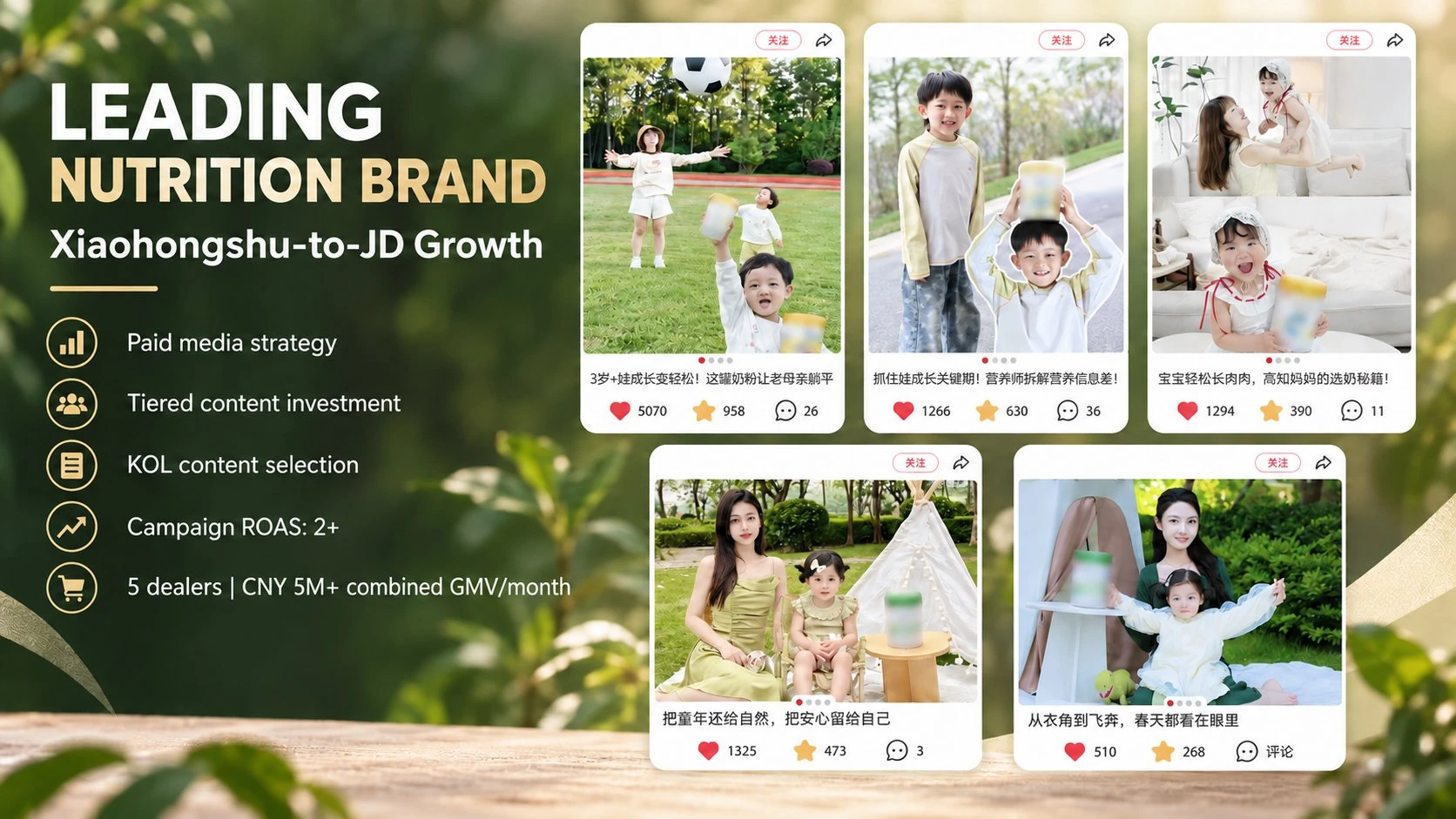
A major Chinese nutrition brand wanted its Xiaohongshu activity to contribute more directly to e-commerce performance. KOL content could create awareness and interest, but the brand also needed a disciplined way to decide which content to promote, which audiences to target and how traffic would continue to JD.com.
Twish developed a performance strategy that connected content quality, paid distribution and the e-commerce destination. The project produced a repeatable method for evaluating KOL content and allocating media support.
Project at a glance
- Client: Major Chinese nutrition brand, anonymous
- Industry: Nutrition and health products
- Market: China
- Project period: Since March 2026, ongoing
- Platforms: Xiaohongshu and JD.com
- Twish’s role: Media strategy, content tiering, audience targeting, KOL content selection and methodology development
- Primary objective: Connect product seeding with measurable e-commerce performance
The starting point
The brand had access to KOL content, but content volume alone did not show which assets could support a commercial result. Promoting every post in the same way would have made it harder to learn which messages and creators deserved more investment.
The campaign therefore needed two types of discipline. First, the team had to assess KOL content according to its role and quality. Second, media targeting and the JD.com destination had to work as part of the same conversion path.
What Twish did
Screened KOL content for paid potential
Twish reviewed KOL content and identified the assets best suited to further distribution. Selection considered whether a post communicated the product clearly, matched audience needs and gave users a reason to continue towards purchase.
Built a tiered media strategy
Content was grouped by function and performance potential. Different levels of media support could then be assigned to stronger assets instead of applying one budget rule to every post.
Refined targeting and linked traffic to JD.com
Twish developed more precise audience and delivery strategies for the selected content. Users could move from Xiaohongshu content to the relevant JD.com destination, allowing the team to evaluate both engagement and downstream commercial performance.
Documented the operating method
The project also produced a reusable methodology covering content selection, tiered promotion and ongoing optimisation. This helped the client and its channel partners make later investment decisions using a consistent framework.
From content selection to marketplace results
The operating method connected decisions that are often handled separately. KOL content was first assessed for message clarity, audience relevance and suitability for paid distribution. Stronger assets then received media support matched to their role in the customer journey.
The JD.com destination remained part of the same planning process. Product information and the landing experience needed to support the expectations created on Xiaohongshu, giving users a coherent route from recommendation to purchase consideration.
Performance data could then inform the next round of content selection and targeting. This feedback loop helped the team identify which combinations of creator content, audience and delivery strategy were more commercially useful. It also gave the five participating dealers a common method for reviewing campaign activity.
Results and evidence
- Total campaign ROAS exceeded 2.
- The campaign supported GMV growth across the five participating dealers.
The engagement began in March 2026 and is ongoing. The five participating dealers have combined monthly GMV above RMB X million. This figure describes the dealer business covered by the programme, while total campaign ROAS measures the return on media spend.
What this project shows
KOL content becomes more commercially useful when a brand has a clear method for choosing what to amplify. Content quality, audience targeting and the e-commerce landing path need to be reviewed together.
For brands selling through a marketplace and dealer structure, this approach can also create a more useful conversation between brand marketing and channel sales. The campaign is evaluated through both content signals and the revenue captured by the destination platform.