Case Study
Reaching Direct Buyers in China Through Xiaohongshu Organic Content
A European fashion trading company wanted to become more visible to retail and distribution buyers in China. The business had relevant products and sourcing capabilities, but limited Chinese-language visibility made it difficult for potential buyers to discover and assess the company online.
Twish used Xiaohongshu as an organic discovery channel. The project focused on publishing useful Chinese content that could appear when buyers researched relevant products and purchasing questions.
Project at a glance
- Client: European trading company, anonymous
- Industry: Fashion trading and distribution
- Market: China
- Audience: Fashion retailers and distributors in China
- Project period: Since May 2026
- Platform: Xiaohongshu / RedNote
- Twish’s role: Organic content strategy and content operations
- Primary objective: Increase visibility and generate direct buyer enquiries
The starting point
The company did not need a campaign built around public follower or lead targets. Its more practical problem was that Chinese buyers had few local-language touchpoints where they could understand the business and decide whether to make contact.
For a trading company, this kind of visibility matters because a buyer often searches before starting a conversation. A useful account can provide an additional layer of proof, explain the offer in familiar language and create a path to a direct enquiry.
What Twish did
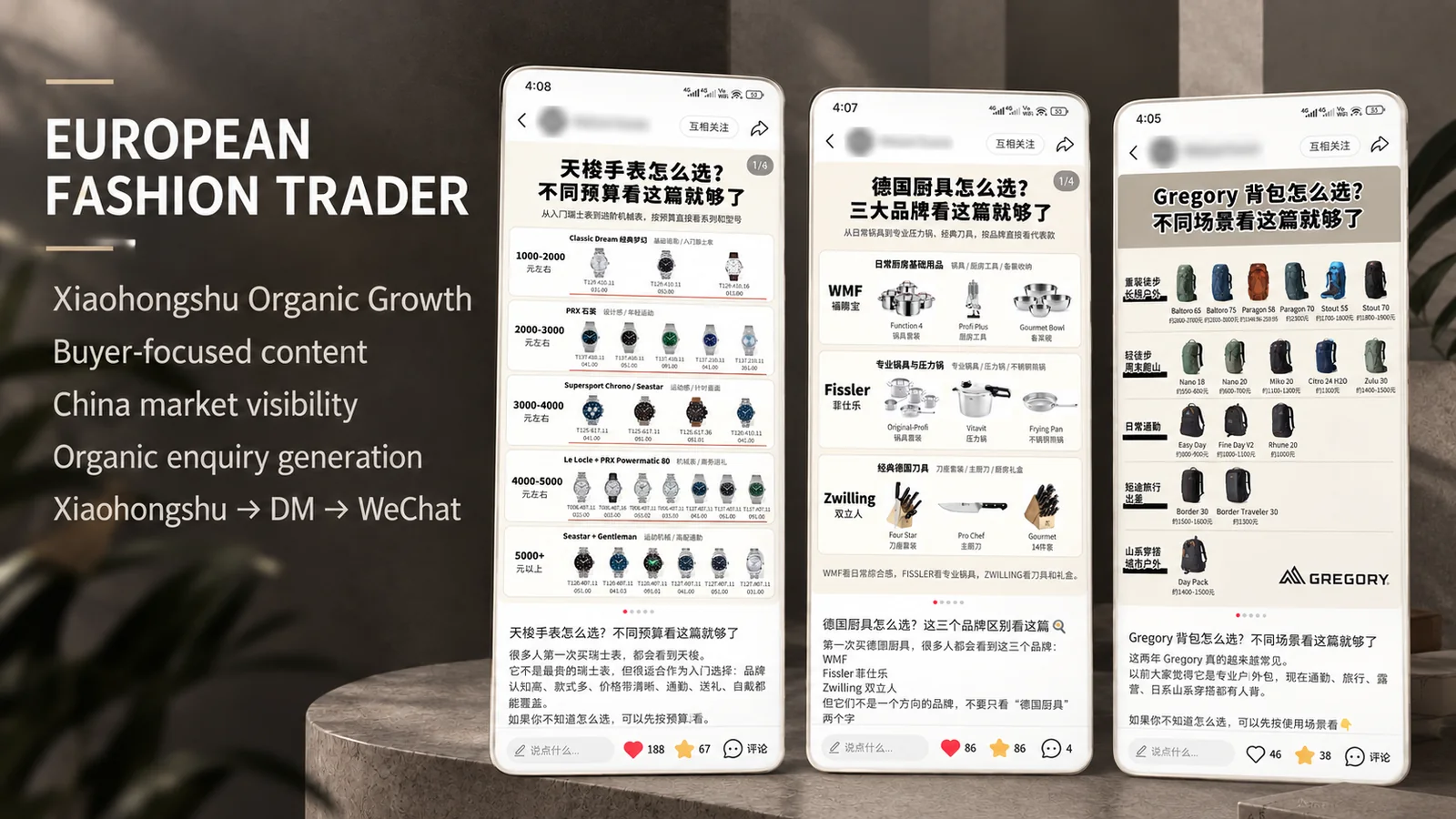
Built content around buyer questions
Twish organised the account around the information a direct buyer would need before making contact. The content avoided broad company promotion and focused on product relevance, purchasing considerations and practical questions.
Developed search-led organic notes
The team created Chinese notes designed for Xiaohongshu’s search and recommendation environment. Clear topics and specific wording made the content easier to discover than general brand statements.
Created a direct enquiry route
The content created a simple route from Xiaohongshu discovery to a private message and then to WeChat. This allowed interested fashion retailers and distributors to move from initial research to a direct procurement conversation.
The account was evaluated through the relevance of the enquiries it produced, alongside visibility. Questions raised by potential buyers could then inform later topics and make the content more useful to similar prospects.
What buyers could assess
Fashion retailers and distributors need enough information to judge whether a potential supplier fits their customers, price position and product mix. The account therefore had to communicate more than a general company introduction. Product context, commercial relevance and answers to common purchasing questions helped buyers decide whether to start a conversation.
The content also gave the trader a Chinese-language reference point that could be shared after an initial contact. A buyer arriving through another route could review the account, see how the offer was presented for the local market and continue the discussion through WeChat.
This was useful for an anonymous case because the result did not depend on publishing the trader’s identity. The page can explain the content and enquiry mechanism while protecting the company name and the number of enquiries received.
Results and evidence
Since May 2026, the Xiaohongshu notes have increased the company’s visibility among relevant Chinese buyers and generated direct procurement enquiries through organic content. Enquiries followed the route Xiaohongshu discovery → private message → WeChat.
The client does not want the number of enquiries published, so the case demonstrates the mechanism and the quality of the contact path rather than using a volume claim.
What this project shows
Xiaohongshu can support more than consumer brand awareness. For the right trading business, it can provide a Chinese-language discovery layer that helps buyers find the company, understand what it offers and start a procurement conversation.
The approach is most useful when the company can answer specific purchasing questions and maintain a clear contact route. Organic content works better when it reduces uncertainty for the buyer instead of simply repeating a corporate introduction.