
Case Study
Building a Xiaohongshu Content and Commerce System for NEWCHI
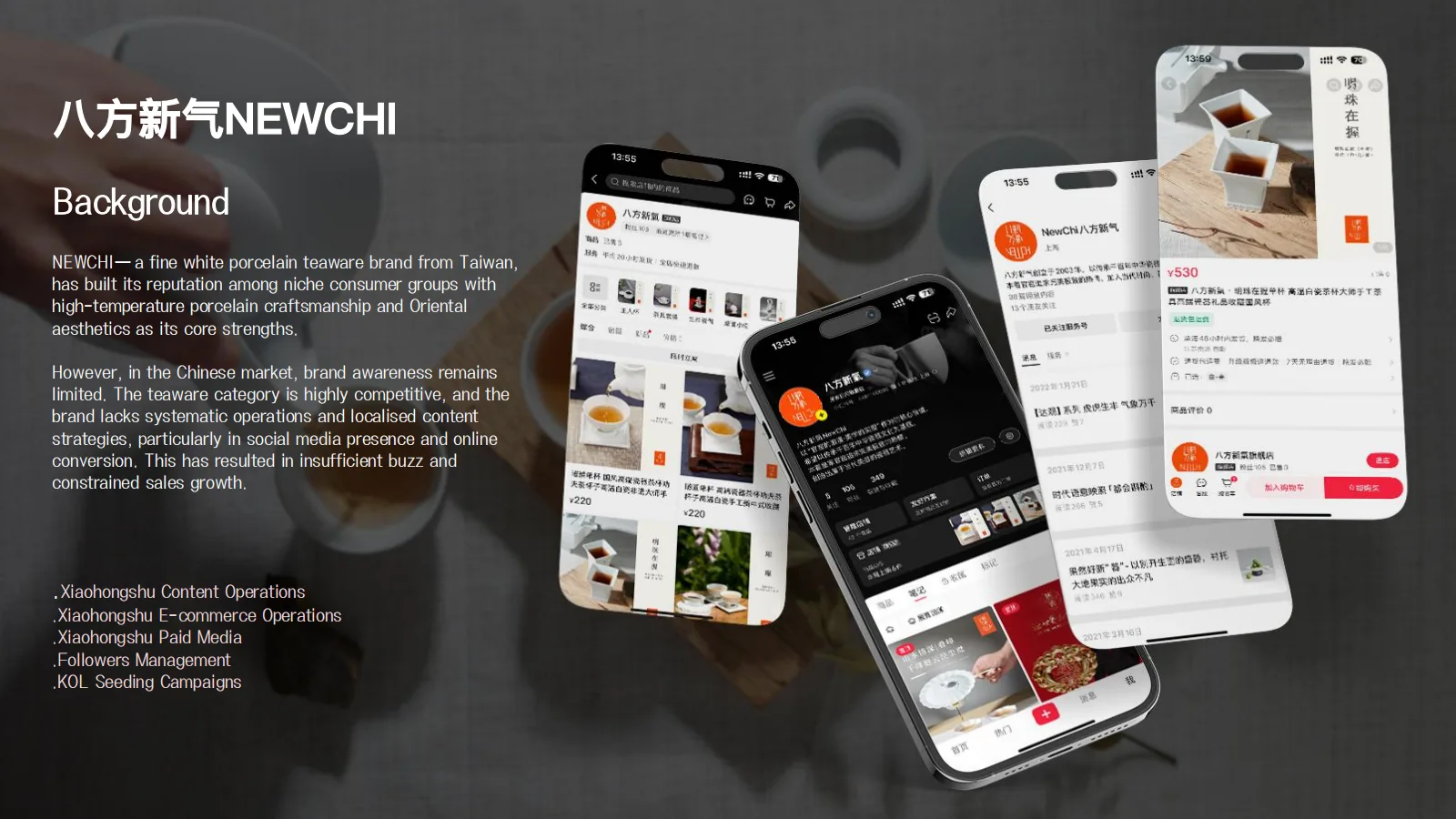
NEWCHI is a Taiwanese teaware brand known for fine white porcelain, high-temperature craftsmanship and an Oriental design language. The brand had appeal among niche consumers, but limited visibility and an incomplete local operating system constrained its growth in China.
Twish helped turn the brand’s product strengths into a Xiaohongshu content and commerce programme. The work brought together local positioning, visual content, e-commerce operations and distribution.
Project at a glance
- Client: NEWCHI
- Industry: Teaware and home lifestyle
- Market: China
- Project year: 2024
- Platform: Xiaohongshu
- Twish’s role: Content, e-commerce operations, paid media, follower management and creator seeding
The starting point
The teaware category is competitive and depends heavily on how users understand design, craft and everyday use. NEWCHI had credible product features, but lacked the consistent local content and platform operations needed to build awareness and convert interest.
The earlier operating model also carried higher fixed costs. The project explored a more content-led route that better matched the brand’s visual character and niche audience.
What Twish did
Translated product strengths into platform-native content
Twish built topics and visuals around white porcelain craftsmanship, Oriental aesthetics and product use. This gave users more context than a standard product listing and helped the brand establish a recognisable point of view.
Connected content with e-commerce operations
The team supported store and product operations so users could move from discovery to purchase inside the platform. Product information and commercial pages were aligned with the content story.
Added paid and creator support
Paid media and KOL/KOC seeding extended the reach of stronger content. The goal was to support relevant discovery while keeping the account’s tone consistent.
Why product education mattered
Teaware buyers often evaluate more than appearance. Material, firing process, function, care and the relationship between a product and everyday tea rituals can all influence the decision. NEWCHI therefore needed content that explained product value in a visual, accessible way.
Twish used the brand’s porcelain craftsmanship and Oriental design language as recurring content themes. Product features could be shown through real use, while lifestyle-led posts placed the pieces in settings that matched the intended audience. This gave the account a recognisable identity and created several routes into category discovery.
The approach also supported search. Specific product and usage topics gave potential buyers useful information when they were actively researching teaware, rather than relying on users already knowing the NEWCHI name.
Connecting discovery with purchase
The e-commerce operation gave interested users a clear next step after viewing content. Product information, imagery and commercial pages needed to use the same language and visual standards as the account. That continuity helped reduce the gap between inspiration and purchase consideration.
Paid media and creator seeding were then used around content that fit the brand. This allowed the team to expand reach without losing the specialist positioning that made NEWCHI distinctive. The result was a more complete Xiaohongshu presence covering discovery, evaluation and purchase.
Results and evidence
Reported results include:
- More than 10,000 monthly visitor growth
- More than 100 monthly follower growth
- More than 3,200 monthly engagements
What this project shows
For a design-led lifestyle brand, content and commerce should be planned together. Visual storytelling creates interest, but product pages and operational follow-up determine whether that interest can turn into a purchase.
NEWCHI also demonstrates why a smaller brand does not always need to begin with the most expensive e-commerce structure. A more focused social-commerce route can create a lower-cost way to test local demand.